Welcome to the Claeys Bouuaert Lab
Our laboratory is interested in the molecular processes that impact the inheritance of genetic material, in particular in the context of meiosis – the cellular program that generates reproductive cells. We use biochemistry and molecular genetics approaches with the model organism Saccharomyces cerevisiae to work out the intricate mechanisms of DNA recombination that are implicated in the formation of gametes.
Research highlights
Dimerization of the S. cerevisiae Spo11 core complex.
By Aït Bella H., Survi M., Urdiain-Arraiza J., Daga D., Subramanian V.V., Hochwagen A., Claeys Bouuaert C. bioRxiv, 2026.
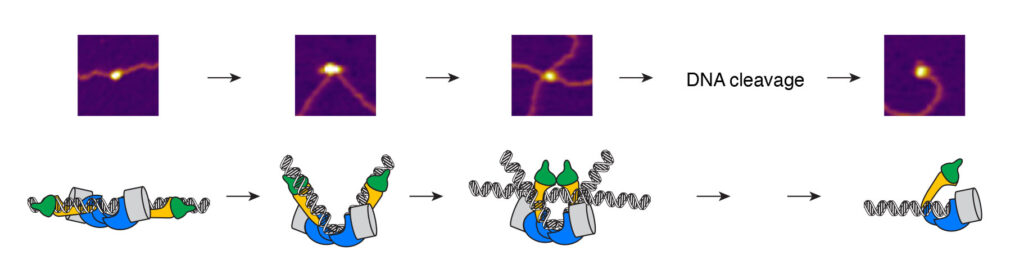
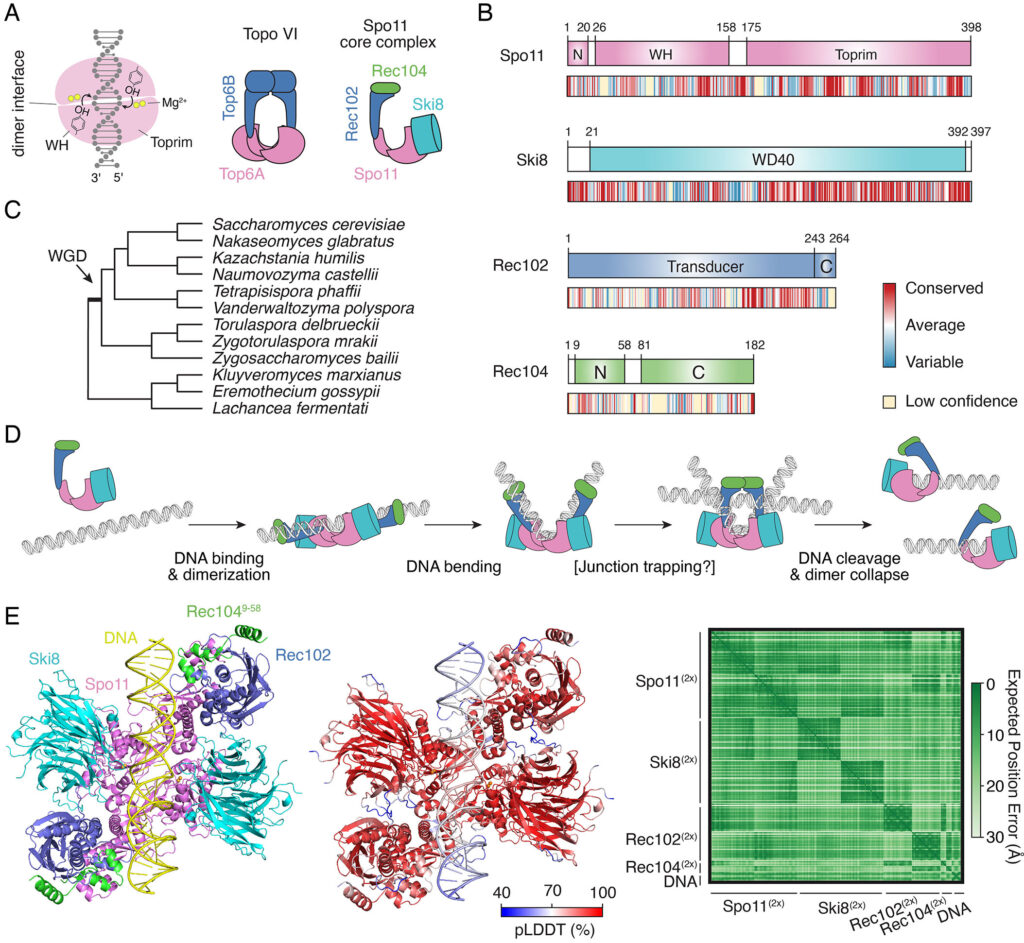
Yeast Spo11 forms a complex with Rec102, Rec104 and Ski8 that must dimerize to enable DNA cleavage. We show that the Spo11 complex dimerizes transiently on DNA, through Spo11-Spo11 interactions and previously unknown interactions between Rec102 and Ski8, providing new insights into how these proteins collaborate to initiate meiotic recombination.
Recruitment of Mre11 to recombination sites during meiosis.
By Priyadarshini P., Survi M., El Yazidi Mouloud W., Bohn R., Ballet S., Hunter N., Volkov A.N., Claeys Bouuaert C. Nature Communications, 2026.
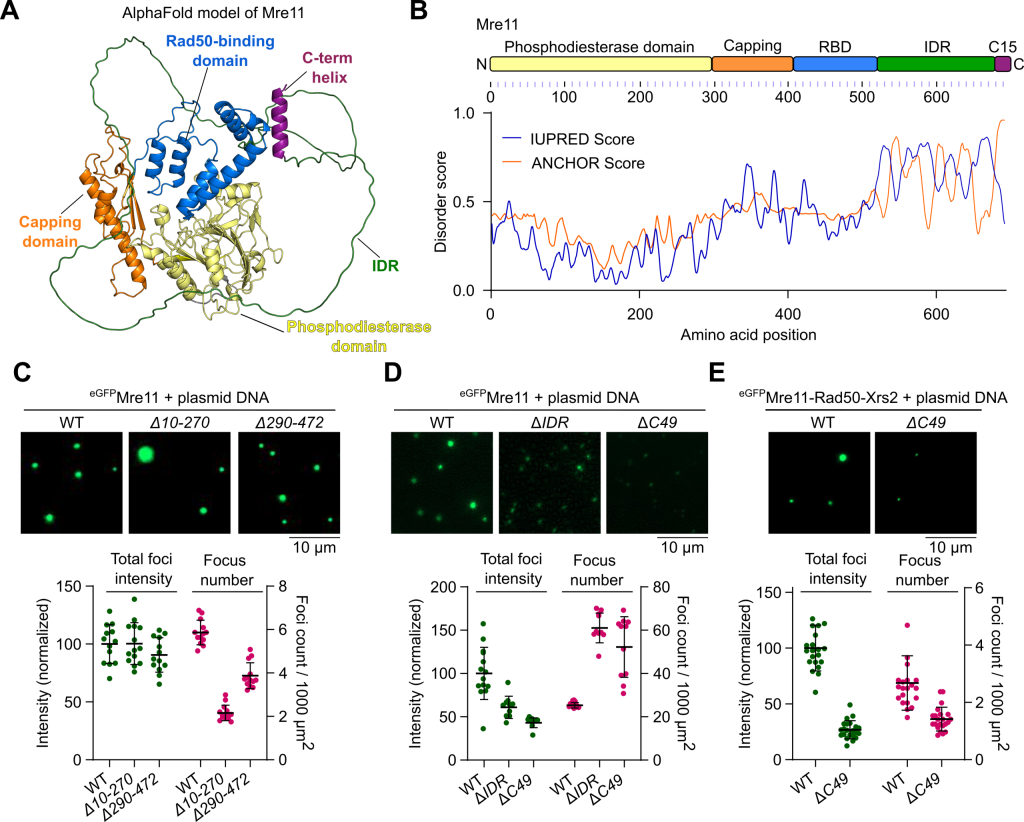
Mre11 is required for the formation of double-strand breaks by Spo11, and their ensuing repair by recombination. Here, we show that chromatin association of Mre11 during meiosis involves biomolecular condensation, direct binding to Mer2 and SUMO-SIM interactions, revealing a combination of mechanisms that allows its recruitment to future recombination sites.
SPO11 dimers are sufficient to catalyse DNA double-strand breaks in vitro.
By Oger C., Claeys Bouuaert C. Nature, 2025.
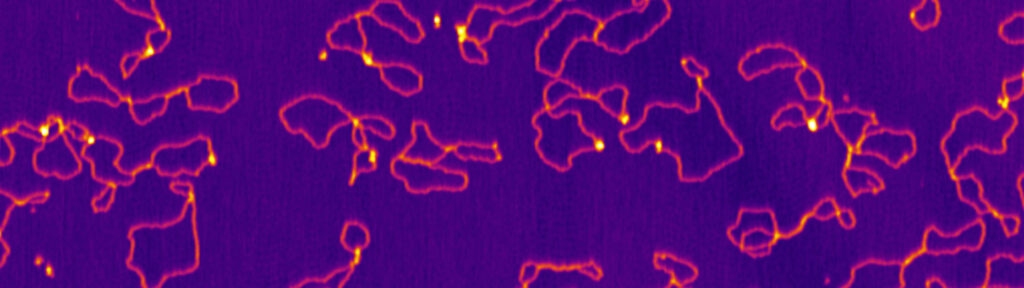
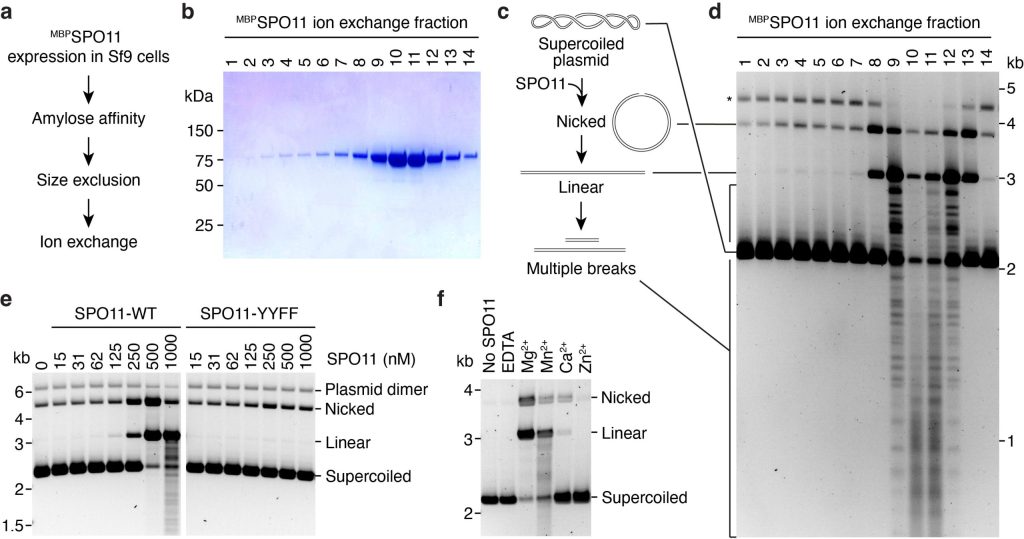
SPO11 initiates meiotic recombination by inducing DNA double-strand breaks, but this catalytic activity had never been reconstituted in vitro. Here, we report the reconstitution of the DNA cleavage activity of mouse SPO11, highlighting the key role of SPO11 dimerization in controlling DNA cleavage.
Evolutionary conservation of the structure and function of meiotic Rec114-Mei4 and Mer2 complexes.
By Daccache D., De Jonge E., Liloku P., Mechleb K., Haddad M., Corthaut S., Sterckx Y.G., Volkov A.N., Claeys Bouuaert C. Genes & Developement, 2023.
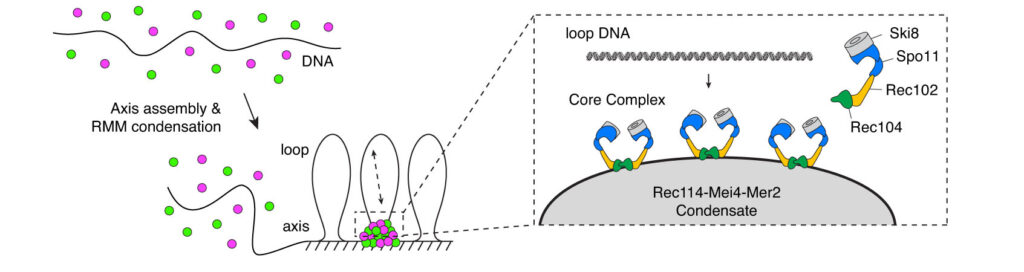
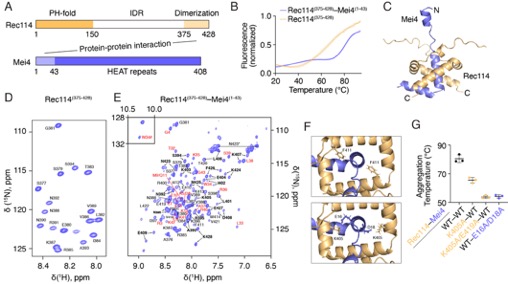
Rec114, Mei4 and Mer2 (RMM) have a central role in organizing the meiotic double-strand-break machinery. This article presents a structural and functional analysis of RMM proteins from yeast and other organisms, revealing deep evolutionary conservation.
DNA-driven condensation assembles the meiotic DNA break machinery.
By Claeys Bouuaert, C., Pu S., Wang J., Oger C., Daccache D., Xie W., Patel D.J., Keeney S. Nature, 2021.
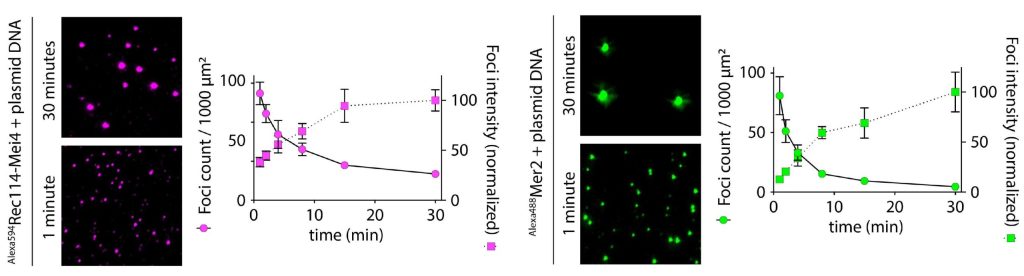
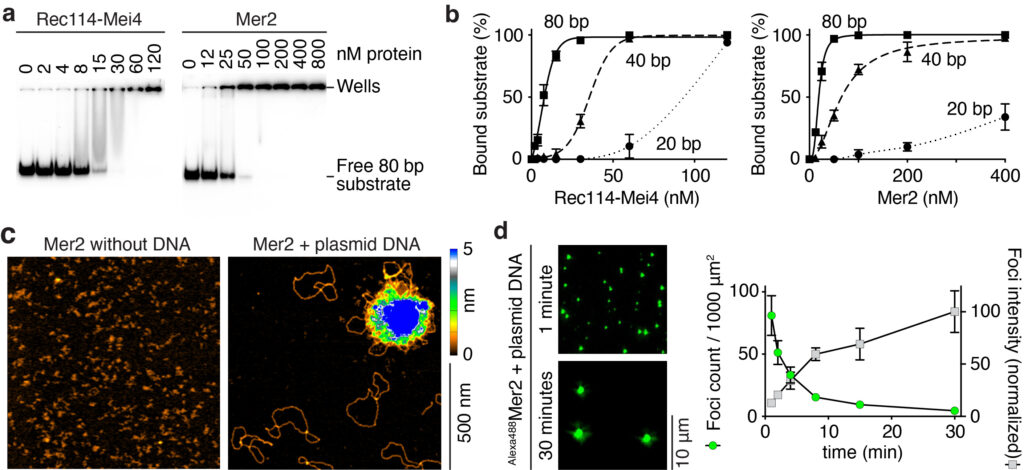
Meiotic DNA double-strand break formation depends on Rec114, Mei4 and Mer2. Here, we show that these proteins undergo DNA-dependent condensation, suggesting a new mechanism whereby they organize the meiotic DNA double-strand break machinery.
Funding